Friday, 28 May 2010

Reviews: Bad Lieutenant: Port of Call - New Orleans

Haven't blogged here in the best part of two months. That's mostly attributable to a hectic football schedule - my thoughts on which are available above via the cunningly-named 'FOOTBALL' tab.

You can blame the producers for the clunky title, but there's much to thank them for too. Thirty-something Chicago-born siblings Alan and Gabe Polsky were looking to switch from investment banking to the movie business, and met up with experienced Hollywood exec Edward R. Pressman. The 67-year-old has helped bring some quality films to the screen - Wall Street, The Crow, American Psycho, Thank You For Smoking - and some awful ones too (such as Judge Dredd and Street Fighter). Among his oeuvre was the outlandish but acclaimed Bad Lieutenant (1992), directed by Abel Ferrara, which starred Harvey Keitel as a corrupt drug-addled gambling New York cop who finds redemption in police work.

Pressman had the rights to any follow-up, and asked the Polskys if they wanted to come on board for their first feature as producers. After watching the original for the first time, the answer from both brothers was a resounding yes. They hired former LA Law writer William Finkelstein to pen a more 'commercially favourable' screenplay than the original (in which there were several visually shocking moments) and then went after a new director and star. Ambitiously, the brothers approached 'the maverick from Munich' Werner Herzog - a director whose previous work (Aguirre, Wrath of God, Fitzcarraldo, Grizzly Man) suggests such a project wouldn't have been up his street. But Herzog saw potential - a fascinating central character that would be perfect for Nicolas Cage, with whom he had long wanted to work, and plenty of scope to tinker with Finkelstein's screenplay.

The finished film shows the Polskys were right to seek Herzog's experimental eye, which has considerably livened up what would otherwise have been a fairly formulaic police procedural. Straight off the bat, Herzog agreed to a request from Cage to move the setting from New York to New Orleans. The action takes place post-Katrina, but the hurricane is rarely referred to beyond a flooded jail cell opening that shows Cage's Terence McDonagh to be a man of mixed morals, taunting a prisoner who's in up to his neck and then deciding to save him after all - a decision that wins him a promotion from Slightly Dodgy Sergeant to the titular Bad Lieutenant.

Thereafter, McDonagh can't stay off the hard drugs, can't stay away from his prostitute girlfriend (a fellow junkie), can't stop gambling on Louisiana's college football team (even though they keep losing)... he's addicted to everything that's bad for him. The brutal murder of an immigrant Senegalese family gives him something else to get his snarling teeth stuck into, and the identity of the culprits - an angry drug dealer called Big Fate and his henchmen - soon becomes clear. As his authority and rationality slowly unravels, McDonagh grasps frantically at the threads in a bid to keep his world together...

Herzog throws his own oddities into the cocktail. Visible boom microphones bounce into the top of scenes of dialogue, an occurrence so obvious and amateurish it must be deliberate. An alligator watches from the side of the road as his companion lies seriously injured following a road traffic accident, accompanied by some jaunty jazz music. During a surveillance, McDonagh's dependency and sleep deprivation results in a hallucination - two iguanas appear, all sleek dewlaps and long necks, their heads bobbing up and down. The cops behind them stand stock still while Cage, resembling the reptiles, watches his vision warily. Later, when Terence is at his most deranged after a shootout involving Big Fate, an even stranger yet funnier image presents itself. In addition, there's quirky casting (eg comic actress Jennifer Coolidge aka 'Stifler's Mom' playing it straight as McDonagh's depressed drunken stepmom Genevieve, and Oscar-nominated Michael Shannon as low-level property room cop Mundt) and the addition of some unexplained symbols (such as a fish in a glass, and a silver spoon) that don't have any obvious meanings at first but can be interpreted differently after the credits roll.

Herzog was keen to drop the words 'Bad Lieutenant' from the release title; but the Polskys wanted to retain it, in the hope of ultimately building a successful franchise of crazed cops, with a different director, star and location each time. Pressman is reportedly not so keen, but it's an interesting premise and if the framework is loose enough for a director like Herzog to work so well within, I'd love to see the results. But the magic ingredient in this particular concoction has to be Cage - an actor much maligned when chasing paychecks in mainstream fare, but worthy of praise when willing to go loco in indieland.


Memorable Line: Terence McDonagh (manically): I'll kill all of you! To the break of dawn! To the break of dawn, baby!

I Know That Face: So many! Here's two... McDonagh's bookie Ned Schoenholtz may be better known to most as the evil Wormtongue from The Lord of the Rings trilogy; and Irma P. Hall (playing the grandmother of a witness to the murders) was Marva Munson in the Coen Brothers version of The Ladykillers.

Location, Location, Location: Audubon Nature Institute - Aquarium of the Americas, New Orleans.

Tuesday, 6 April 2010

Diary: Myths, Titans and Twists


There was a certain point in my boyhood (probably around the age of nine or 10) when Usborne's Greek Myths and Legends was my favourite book. I expect this literary devotion lasted for about four days, but I doubt I'm alone. Thousands of schoolchildren must have been introduced to the deities of the ancient world through various editions of this title. As an introduction to classics, it was perfectly judged - full of vibrant pictures, maps and informative text.
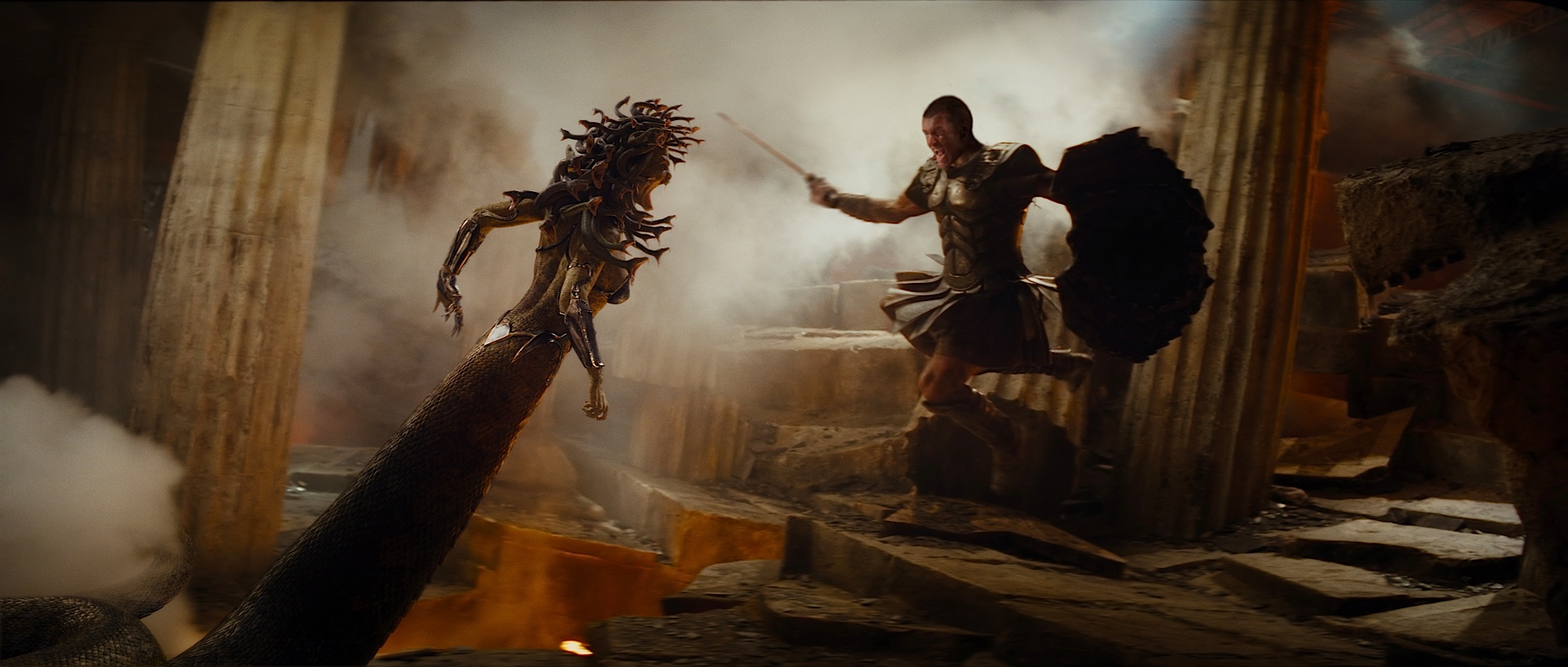
Among the many myths included was that of Perseus, a rollicking good yarn about a brave young warrior and a woman with snakes for hair who had a stare to rival that of Pierluigi Collina. It was loosely brought to the big screen in a much-cherished 1981 film which mixed in the acting talents of Laurence Olivier and Maggie Smith with the animation of Ray Harryhausen. I also recall a small-screen version of the tale: it was made in 1989 as part of the Jim Henson's The Storyteller series, with Michael Gambon as narrator and a fairly realistic Muppet dog to keep the kiddies interested.
All this nostalgia is relevant because, as I'm sure you know by now, Perseus has been repackaged for a whole new audience in Clash of the Titans, Warner Bros' big Easter money-maker. Choosing to watch the movie in 2D rather than 3D was a no-brainer after reading several reports of pointless shonky post-production work that wasn't worth the extra spend at the box office.


The happiest customer would have been my 10-year-old self, although I hope even he might have groaned at some of the lamentable dialogue that peppers this throwaway but otherwise enjoyable swords-and-sandals CGI-laden romp. It owes much to The Lord of the Rings: The Fellowship of the Ring in terms of style and construction, with powerful gods in place of warring wizards, but lacks any of that film's character development or levity in the script.
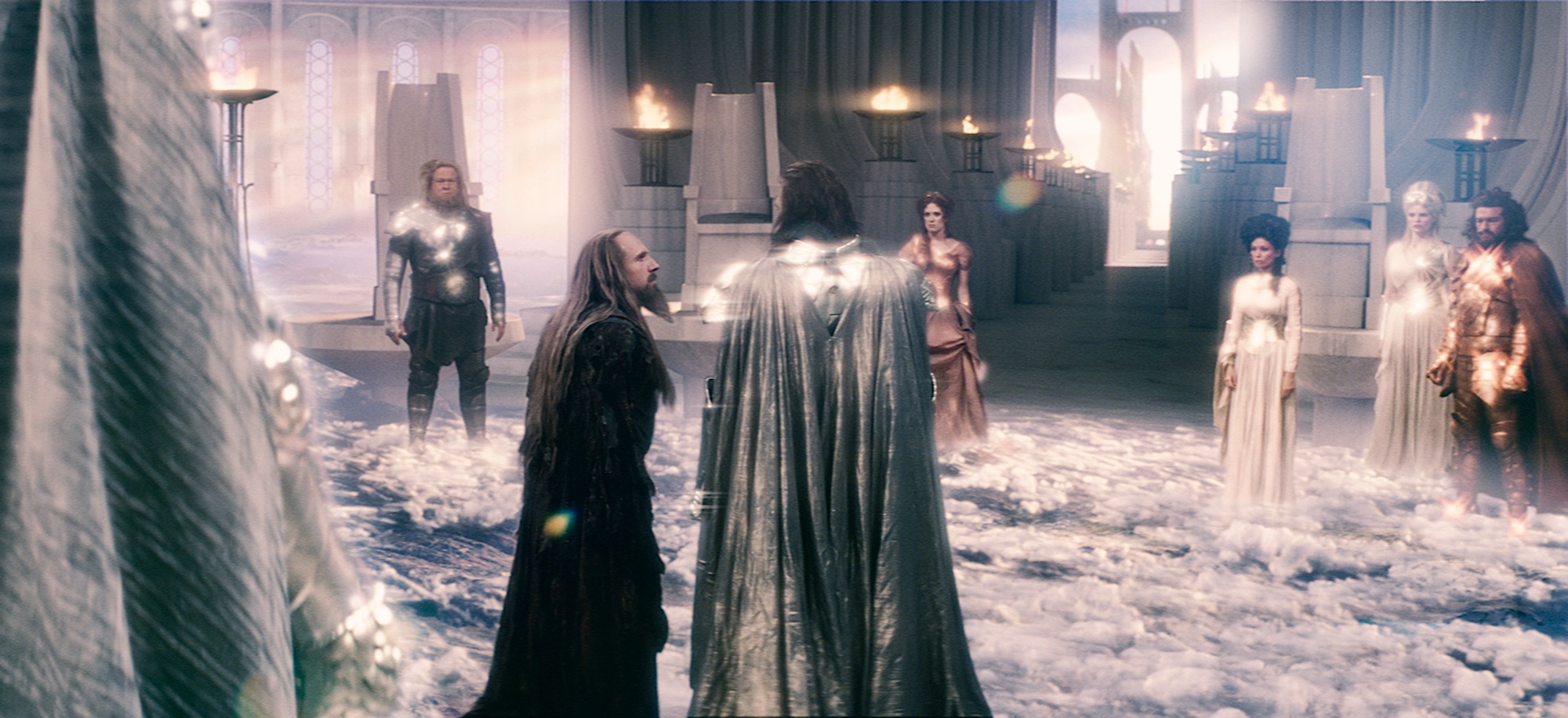
Zeus (Liam Neeson) and Hades (Ralph Fiennes) bawl and hiss respectively at one another, while the rest of Olympus watches on bored, particularly trident-wielding Poseidon (Danny Houston). Perseus (Sam Worthington) is a cardboard cut-out hero who's hard to root for, particularly when he comes out with lines like "don't look that bitch in the eye" before dropping in for a date with Medusa. Meanwhile, back in Argos, where a catalogue of insults has seriously narked Zeus, there resides a wittering zealot called Prokopion (Luke Treadaway), possibly the most irritating character seen on screen so far this year.
The gods and humans largely disappoint, although the supporting critters are more fun. The angry accursed Acrisius (Jason Flemyng), who has been left with a head that resembles a pitta stuffed with kebab meat; the Stygian Witches, like fussy great-aunts of the Pale Man from Pan's Labyrinth; the Djinn, desert spirits patched up with tree-bark who owe much to Star Wars' Tusken Raiders. And the monster you've all been waiting for - the Kraken, a gargantuan sea monster with a sweet tooth for sacrificial virgins.


Quite why certain citizens of Argos decided to go for a stroll along the sea front on the day the Kraken was coming to town beats me but then again, it's of little importance - much like this whole movie. But that's not to say it won't appeal to any nostalgic memories of bedtime reading you may have, despite the strangely mangled script.


Last Monday, I caught Martin Scorsese's Shutter Island. As I Tweeted at the time: "Shutter Island gripped me like a straitjacket. Taut, unsettling and full of the inventive scene construction that Scorsese always delivers." There's been much talk about the twist (it's more than predictable) but there's a thought-provoking last line that lifts the ending above similar thriller fare. Recommended.

Wednesday, 24 March 2010

Reviews: Kick-Ass

Red Mist is cruising the streets of New York City in a souped-up Mustang, with Kick-Ass riding shotgun. The driver resembles some sort of S&M Ziggy Stardust, while his passenger has been scathingly described earlier in the film as 'The Green Condom'. Gnarls Barkley's Crazy comes on the stereo and our not-so-superhero starts nodding his head to the music. Soon Red Mist joins in, and for that moment the costumes and the car don't matter - it's just young guys goofing around, Wayne's World style. The song's lyrics could even have been written by Kick-Ass' awkward alter-ego, Dave Lizewski:

My heroes had the heart
To lose their lives out on a limb
And all I remember
Is thinking, I want to be like them

Ever since I was little
It looked like fun
And it's no coincidence I've come
And I can die when I'm done


I often see a parade of costumed students like Lizewski when driving at night through my suburb of Headingley in Leeds. Iron Man, Batman, Superman... usually a few cavemen, nurses and, for some reason, golfers too. Their dressing-up is purely to add some colour to a pub crawl (although the bravest like to play a game of human Frogger in the traffic). Now creator Mark Millar and director Matthew Vaughn have spliced this sort of make-believe with all-guns-blazing action and adult humour to create Kick-Ass - a movie that places the comic-book genre back in our hands and in our daydreams.

Initially, the studios baulked at the British duo's vision of a geek living out his fantasies while around them, the truly dangerous heroes and villains rack up the body count - proof yet again that 'nobody knows anything' in Hollywood. Yet this proved something of a blessing for Vaughn; with no studio interference comes great originality. The characters could hardly be more appealing to the film's target audience - a slightly-below-average-Joe protagonist to identify with (Aaron Johnson); a sadistic mobster boss who looks like a slick City banker (Mark Strong); his eager-to-impress loner son (Chris Mintz-Plasse, aka Superbad's McLovin); and crucially, a hands-down, one-off Hannah-Montana-meets-The Bride assassinette who prefers switchblades to sweet little Barbie dolls.


The Daily Mail took a strong stance on the scene-stealing Hit-Girl (Chloe Moretz) a month before the film opened, pointing its bony wrinkled finger of moral outrage firmly in the direction of screenwriter Jane Goldman. I'm sure you'll make up your own minds on whether a 12-year-old should be heard dropping C-bombs as well as grenades on the big screen, but Goldman's script shows she knows how teenagers really talk - or would do if they had the self-confidence of a masked vigilante. A 15 certificate is the correct rating. It's cartoon violence with attitude, a more stylish Mystery Men with extra blood and beatings.

Vaughn's style is unashamedly fan-boy, but that will now feel familiar to a mass audience having been distilled through the X-Men and Spider-Man trilogies and their ilk. He starts off by using comic-book cuts and box-outs that are dropped when the reality of Lizewski's humdrum life is established, only for an impressive graphic-novel-style sequence to be later introduced for the back-story of Hit-Girl's eccentric avenger father Big Daddy (Nic Cage, channelling Adam West's TV caped crusader when suited up). Even the unfolding relationship between Dave and girlfriend Katie is handled neatly; we see her misconceptions gradually broken down by his goofy charm in above-average rom-com scenes.

All the moneymen who Vaughn originally pitched to "freaked out" at the idea for Kick-Ass and threw the synopsis back in his face. Thanks to close friends and investors, he got the project off the ground and later, those same studio execs were all clamouring to get back on board. Yet being made outside the system was just what this rebellious movie needed; it's had to fight hard for the hype which currently surrounds it. Don't think you've seen it all before with superhero flicks - if you've ever stood in front of a bedroom mirror and struck a kung-fu pose, you'll want to cheer on this ragtag wannabe crimefighter. And with Little Miss Lethal on hand to provide back-up, that should serve as a cinematic call to arms for today's apathetic youth.

Memorable Line: Mindy Macready: Can I get a puppy? A cuddly fluffy one? And a Bratz Movie Stars Makeover Sasha? (dryly) I'm just fucking with you Daddy. I'd love a bench-made model 42 butterfly knife.


I Know That Face: Detective Vic Gigante - firmly nestled in crime boss Frank D'Amico's Armani pocket - is played by Xander Berkeley, whose former CTU chief George Mason is much loved by 24 aficionados.


Monday, 22 March 2010

Diary: Restorations and Accusations

I've read several articles online recently referring to a backlash against bloggers by professional critics and those who work in various arts industries. In last Sunday's Observer, Vanessa Thorpe wrote that what some see as "democratic cultural debate... others condemn as the death of informed analysis".
As someone who's just started a blog, I find this attitude towards the likes of me rather pompous and patronising. According to Variety's theatre critic David Benedict:

Bloggers are dealing in unfettered opinions. True criticism is analysis, and it gives you an understanding of the form. Ideally, a critic doesn't just tell you something didn't work; they tell you why.
For someone whose life is largely spent celebrating creativity and originality, Benedict's sweeping statement is surprising. The vast majority of blogs that I have read on film, music etc are certainly not an outpouring of skewed points of view. On the contrary, many writers use the blog format to carefully analyse their topic, comparing and contrasting with other cultural references and presenting a considered view. They also openly interact with their readers, which  results in a broader spectrum of opinions being expressed - and, where necessary, challenged. Thorpe's article refers to two distinct camps - on the one hand, you have the "cultural aristocracy... the learned troupe (of) professional reviewers...", and on the other are "bloggers (who lack) cultural memory". In my experience, these extremes are rare and most bloggers occupy a middle ground where they are indeed attempting to offer an explanation of what works and what doesn't work, based on knowledge of and enthusiasm for their chosen topic. For most, blogging is an unpaid hobby and to sneer at them en masse, just because they are "amateurs", appears snobbish. 
The thrust of Thorpe's focus is towards the theatre community (and specifically those who blog about musicals) but the article also includes review excerpts from other arts bloggers which are compared to more highbrow comments from national newspapers. Are these critics feeling threatened? If so, it's a childish reaction. They should be encouraged that Joe Public wants to join in the cultural debate; by reading a wide range of views, we can all become more informed.

I'm always interested in what other film critics and bloggers are saying about movies, especially those I've just seen. After writing a review myself, I'll aim to read around and compare notes. I'm no great fan of the News of the World, but I always read Robbie Collin's reviews as he frequently makes me laugh. He voices strong, forthright opinions in an amusing way and while he's unlikely to ever be seen as another Roger Ebert, he provides perfect tabloid fare. Check out his review of The Blind Side, which I saw last Sunday. He certainly hits the mark when he refers to the Memphis housing projects shown in the film looking like "the World's Cleanest Crack Den". Empire magazine was similarly on the nose when their reviewer Ian Freer described the scenes as feeling "like a Disneyland version of The Wire"

On Monday, I went to see The Girl With The Dragon Tattoo at Hyde Park Picture House. Having read the book by Steig Larsson a couple of months ago, the story was still fresh in my mind and I was relishing the movie. Overall I was impressed with the adaptation although at two-and-a-half hours long, the lack of editing was a problem. Several scenes could have been left on the cutting room floor without damaging the narrative, particularly when the protagonists Lisbeth Salander and Mikael Blomkvist are driving around snowy Swedish backwaters. The Scandinavian scenery was certainly attractive but moving along the complicated plot was a more pressing issue. The novel's controversial rape scene was hard to watch but successfully established Lisbeth's complex character, and it was refreshing to see such an unlikely heroine on the big screen.
Unsurprisingly, a US remake is in the offing with Britain's very own Carey Mulligan up for the Salander role and David Fincher pencilled in to direct. It'll all be relocated to the States of course, but whereas most remakes seem a fairly pointless exercise, having a genius like Fincher at the helm bodes well in this instance. His trademark flourishes and past successes in the thriller genre should ensure he brings something new to proceedings.


My nearest cinema is Cottage Road, which lies two streets away from where I live. The building dates from 1835 but it's been showing films since 1912. It's convenient and rewarding to be so close to two historic picture houses but I'm often slightly disappointed by the programme at Cottage Road when compared to Hyde Park. There's rarely anything shown that doesn't fit into the "family friendly" category.
However, you won't find me criticising their monthly Classics at the Cottage nights. The latest was on Wednesday and the film showing was a new print of The Red Shoes, a British classic from 1948 much loved in particular by Martin Scorsese who helped fund its restoration.
Before the movie began, a healthy turn-out was treated to a selection of vintage cinema ads from the 1970s and 80s for products such as Lyons Maid ice cream, Benson and Hedges cigarettes and Brooke Bond D tea. There was also a classic wartime Stanley Holloway short which urged the audience to contribute to National Savings - "lend to defend the right to be free".  Clearly a lot of thought and hard work had gone into acquiring and preparing this nostalgia.
The film itself may have needed touching up but its power has not faded over time. It's a compelling tale of creative and romantic passions in a ballet company, all filmed in glorious Technicolor.


On Thursday, it was time for another new release - Green Zone. With Paul Greengrass and Matt Damon working together again so soon after the excellent Bourne Supremacy and Bourne Ultimatum, what could go wrong? Action-wise, very little. There's excitement and explosions, all filmed in Greengrass' familiar shaky style. The myth of Iraq's WMD threat forms the basis of the plot, which surmises what might have happened if Damon's Special Forces warrant officer (based on a real-life US soldier) had pushed hard for answers when failing to find Saddam's supposed stash of nuclear goodies. Personally, I'd have liked to have seen the role of the media, represented by Amy Ryan's journalist, rounded out more fully. Her character Lawrie Dayne is shown trotting out the government line on the intelligence. Reporters may have ultimately failed to hold those in power to account but there were reasons for this - a fear of appearing anti-American, competitive newspaper editors looking to trump their rivals and 'creative' journalism and headline-writing designed to chime with a nation stirred up for revenge by their political leaders. Greengrass fails to address these pressures, under which men and women like Dayne were working at the time, and consequently the thriller relies too heavily on hindsight for its comment on the media's ineffective check on government.


Let The Right One In finally found its way into my DVD player on Saturday night. As I tweeted after viewing: "Deeply affecting. Love and horror beautifully interwoven. Who needs Twilight?"
Next up for me at the cinema is
Kick-Ass on Tuesday, which I'll aim to review before its general release next weekend.

Saturday, 20 March 2010

Look Backs: Scenes that stay with you

As I write, over 600 readers have commented on the website version of an Observer article by Philip French from last Sunday entitled 'The greatest film scenes ever shot'. The topic has been inspired by the 50th anniversary this year of the release of Alfred Hitchcock's masterpiece Psycho, whose 'murder in the shower' scene is the most memorable from the whole picture, and must be considered one of cinema's greatest.


Another memorable moment mentioned by French and one of my personal favourites is the reveal of Harry Lime (Orson Welles) by light from a window, illuminating him in a Vienna doorway in The Third Man...


The user comments are well worth reading. Some of the scenes selected by readers that also resonated with me included: the bravura tracking shot through the restaurant kitchens in Goodfellas; the car chase through the hilly streets of San Francisco in Bullitt; various Tarantino scenes (too many to list here); the unusual rainfall in Magnolia; the Russian roulette scene in The Deer Hunter... I could go on. In truth, every film I love, most I like and many I don't care for that much have a stand-out scene that is worth watching again and again.

In conclusion, I'll post one of my favourites that wasn't mentioned in the comments on the Observer article. It's weird and wonderful and I believe features one of the most unusual creatures ever seen on screen. There's a strange beauty to it that still haunts me, and it's undeniably scary but also enchanting. Hope you agree. What's your favourite scene? Please let me know below.

Monday, 15 March 2010

Reviews: The Blind Side

'I don't know whether I won cause you liked me, or because I wore you down' - Sandra Bullock, Best Actress Oscar acceptance speech, 7 March

I took my seat at Sunday's preview screening of The Blind Side with Bullock's self-deprecating quip very much in mind. Exactly how did she win the highest movie performance accolade on earth? What was I about to see on screen that has elevated this 45-year-old comedy actress to a dramatic class alongside Meryl Streep? The night before the Academy Awards, Bullock had even collected a Razzie for her role in the film All About Steve. Panned and praised in public in the space of 24 hours; wait till Hollywood gets hold of that true story.

Bullock's Wikipedia entry carries a quote about her from film critic Mark Kermode: "She's funny, she's gorgeous, it's impossible not to love her and yet she makes rotten film after rotten film after rotten film." I have deliberately swerved most of these movies to date (life's too short to watch decaying cinema) but I have to concur on Kermode's first two points, and Bullock's career proves that likeability equals longevity in showbusiness.

Bullock's reputation and her Oscar triumph should guarantee good numbers in the UK for The Blind Side, even though few British filmgoers who see it will have much knowledge of the source material. In short, a poor black teenage boy, who's something of a gentle giant, is taken in by a wealthy white woman and her family in Memphis. After several months of getting up to speed academically, the boy - Michael Oher (Quinton Aaron) - is unleashed onto the football field. College coaches are soon clamouring to recruit him, leading to some tough questions and eventually a big decision.

There's no denying this is an "extraordinary" true story (the film poster helpfully reminds us) that was worth bringing to the screen. Oher's journey takes him from mean streets to NFL stadiums, from the ravenous to the Ravens, and it's a brassy Republican interior decorator who gives him directions, transcending traditional Deep South divides of class and race. Bullock brings humour, warmth and star quality to her role. She was right on both counts as to why she won the Oscar. However, this does not catapult her into the top echelon of actresses. Call me old-fashioned, but I think awards should be handed out on merit, even if you are Miss Congeniality.  


Also up for debate in The Blind Side is the storytelling employed by writer/director John Lee Hancock. It took five years for Hancock to see another green light after the failure of The Alamo. The movie was trounced on Easter weekend six years ago by Mel Gibson's The Passion of the Christ, and showed an estimated loss of just under US $120m. Hancock eventually went back to what he knew best - sports. His first picture The Rookie had been a minor hit for Disney in 2002 and has since become a firm family favourite.

And broadly speaking, that's Hancock's target audience - Mom, Dad and the kids. On screen, the Tuohys are the perfect unit and you're invited into their home to identify with them. Hancock has given Leigh Anne 'smarts' and a winning smile; Sean is slightly hen-pecked but wise and steadfast; SJ is a cheeky scamp; and Collins is a polite, well-mannered teenager (OK, not so believable). Having watched an interview with the Tuohys, they seem favourably depicted.

Outside the clan, it's a different story. Michael's sceptical teachers, the goofy high-school football coach, the toughs in the projects, the drug-addled mother, Leigh-Anne's bitchy friends, the hard-nosed NCAA official - all these supporting players come across as caricatures and stereotypes. Some further digging reveals Oher's school, Briarcrest Christian, asked not to have their name used in the movie, so upset were they with the "artistic license" used by Hancock. And bar one scene where the family says grace, God is never mentioned. Considering Leigh Anne's Christian values inspired her to take in Michael Oher in the first place, why has her faith been stripped out of the film?

The Blind Side is what I'd call a McDonald's movie (here comes the analogy). It made me feel good at first, but sometime later I was left feeling hungry for more wholesome fare. Appropriately, Bullock provides some premium beef; sadly, it's surrounded in processed cheese.

Memorable Line: Leigh Anne Touhy: If you so much as set foot downtown, you will be sorry. I'm in a prayer group with the D.A., I'm a member of the NRA and I'm always packing.

I Know That Face: Wingate football coach Burt Cotton is played by
Ray McKinnon, who was the weaselly campaign manager in 2000 Coen Brothers Depression adventure O Brother, Where Art Thou? Like Bullock, McKinnon is an Academy Award winner - he shared the Oscar for Best Live Action Short Film with his wife Lisa Blount in 2001 for The Accountant.

Listen Again: Southern Voice - Tim McGraw.

Further Reading: The Blind Side by Michael Lewis. As recommended by my mate Imran on Twitter. In addition, here's an interview with the author where he talks about the real Michael Oher.


Sunday, 14 March 2010

Diary: Locker, Stock and a Barrel of Laughs

A cracking La Liga clash between Real Madrid and Sevilla was my send-off at TEAMtalk Towers for a week's holiday. I've got loads of time to take between now and the end of June so with no major plans other than a couple of nights in London in midweek, it was a good opportunity to down tools.

While hunting for some blogs to inspire me to start writing, I found this excellent Guardian website article by Andy Bull, which tells the story of how four guys with little to zero experience ended up winning Olympic gold in bobsled at the 1932 Winter Games in Lake Placid. It's a fine piece of sportswriting and everyone who I forwarded it on to agreed it would make for an exciting movie. Kind of like The Aviator mixed with Cool Runnings, if you know what I mean.

On Sunday night, I went to see A Single Man at the Hyde Park Picture House - a cinema here in Leeds that I'm bound to write more about in due course. It dates from 1914, the Edwardian era, and is a beautiful venue in which to watch movies. Mark Kermode can often be heard raving about it (he's at it again on his latest blog post, about 30 seconds in); indeed, I was fortunate enough to meet him there recently on his book-signing tour. I've been a member of the cinema's Friends group for a couple of years now and am hoping to get more involved with all the events etc they have going on. I never got around to writing a review of the film, which I enjoyed very much even if it was a bit of a triumph of style over substance. Colin Firth is compelling in the lead role and as a study in human loss early on in the film, it's hard to fault. After that, if you can get the past the fact that it's strange how Firth's George is suicidally lonely when everyone he meets is so friendly, there's plenty to enjoy - not least the fashions and the appeal of a Santa Monica summer. It was freezing in Leeds that day so the prospect of sunnier climes was as attractive as a slightly tipsy Julianne Moore (one of my very favourite actresses) dancing to Booker T & the MGs' Green Onions (as previously heard on screen in the superb Get Shorty). The melancholy score by Abel Korzeniowski is well worth a listen too.

On Monday morning, I watched the Oscars back having Sky+d them the night before. No real surprises other than perhaps The Hurt Locker taking Best Picture over Avatar. The actual announcement of the big award of the night was such an anti-climax, Tom Hanks striding on stage and declaring the winner in about 30 seconds flat. Kathryn Bigelow's film is tense and thrilling in all the right places but it was nowhere near the best of 2009 for me. My most-loved were A Serious Man and Moon, both of which I hope will find a bigger audience on DVD etc in the future than they did in cinemas last year.


I went to a play reading of Henrik Ibsen's Ghosts on Monday evening with an amateur dramatics group a mile from where I live called the Adel Players. It was my first meeting with them and I really enjoyed it. I'm thinking of getting back into drama so I shall probably go and watch them rehearse their current production of The Cherry Orchard at some point to find out a bit more about them.

On Tuesday, it was down to London where in the evening I watched a dreadful football match (QPR 2 Plymouth Argyle 0). It was great to catch up with friends however, and on Wednesday I saw the production of The Little Dog Laughed at the Garrick Theatre
, just up from Trafalgar Square. This was a sharp satire on Hollywood attitudes to homosexuality and Tamsin Greig was the stand-out performer, cast as an acid-tongued agent.

Back to Leeds on Thursday, and an enjoyable Friends meeting with other Hyde Park Picture House members. So far this weekend I've watched The Hangover, Rocky Balboa and caught up with some more of Damages Season 1 - all DVDs that have been loitering in my 'to watch' pile for far too long. Finished reading Stieg Larsson's The Girl Who Played With Fire and started on Michael Bilton's Wicked Beyond Belief. Tomorrow morning I'm off to see Sandra Bullock in The Blind Side (preview screening at Showcase Cinema). Review coming later then!